
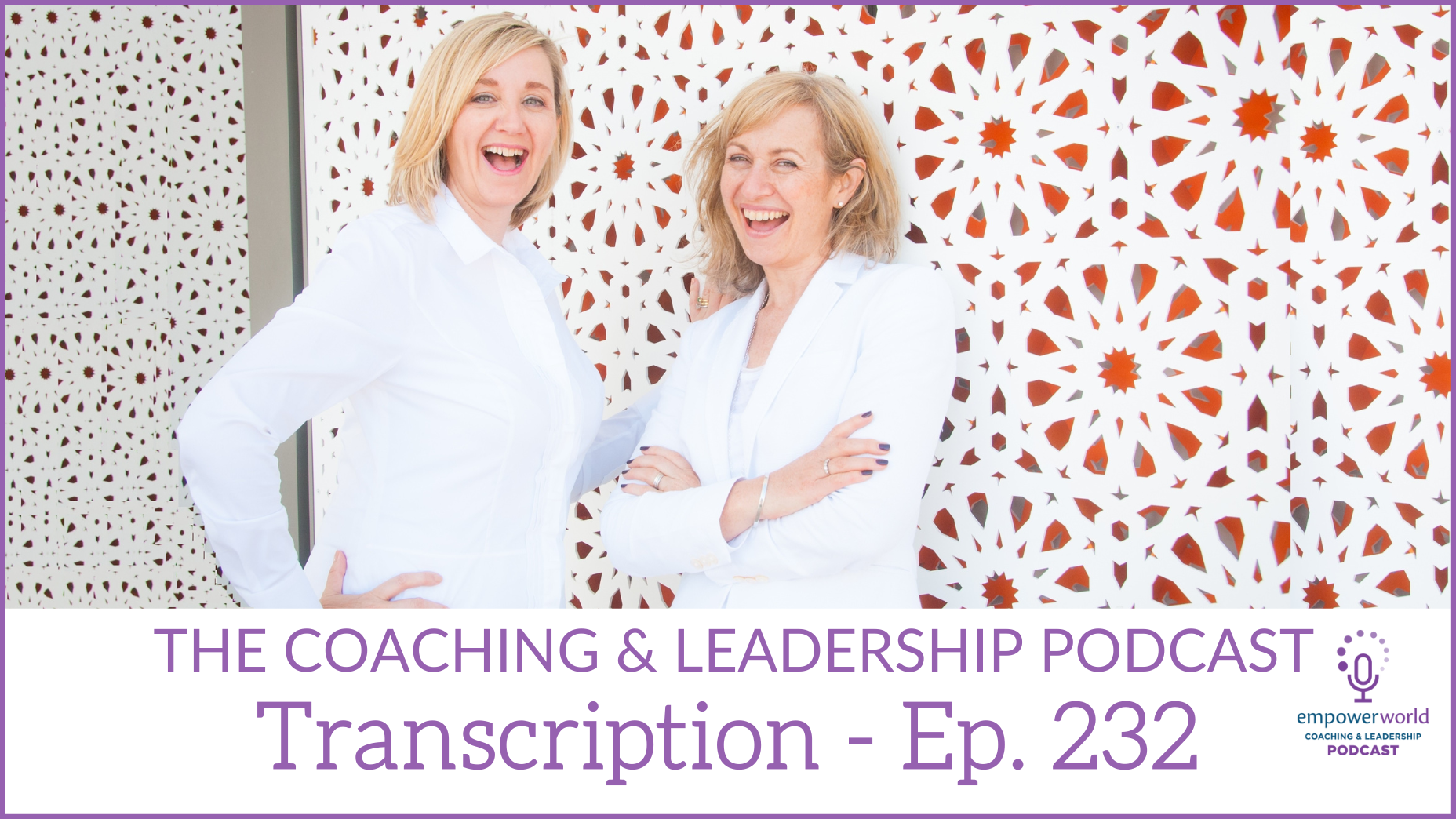
Jeanine Bailey & Marie Quigley
Co-founders of Empower World
Jeanine Bailey:
Hello and welcome listeners to the next episode of the Empower World Coaching and Leadership Podcast. I’m very delighted to be in the same Zoom room as my business partner, Marie Quigley. Marie, welcome! It's been so long since we’ve done one together.
Marie Quigley:
It’s been a while! You’ve been traveling the world, and a lot has been happening. It’s wonderful to finally come together to record something. I’ve loved listening to the episodes we’ve done individually with our amazing guests-so many thought-provoking conversations. It’s great to be with you again.
Jeanine Bailey:
Yes, and I know you’ve been busy too, Marie. Even though we’re on opposite sides of the world-me in winter in Australia, you in summer-it’s great to be here. I came back for my mum’s 90th birthday celebration, which was very important to me.
Marie Quigley:
Happy birthday to your mum!
Jeanine Bailey:
Thank you! I’ll pass that on. So, Marie, you and I had a chat to decide on today’s topic. We thought we’d focus on what we’ve been noticing as mentors and assessors of other coaches-specifically around Competency 3: Establishes and Maintains Agreements. We know this can be a bit of a stumbling block.
Marie Quigley:
Yes, absolutely. Competency 3 also includes the written contract and three-way conversations with organizations, but today we want to focus on maintaining the agreement within a coaching session itself. This is not about ticking boxes for 3.1, 3.2, 3.3, and 3.4. It’s about deeply understanding how to naturally and easily bring these competencies to life. When that happens, assessors can clearly hear the competencies in action.
Jeanine Bailey:
So true, Marie. Recently, I was mentoring a very experienced coach-she’s done thousands of hours of coaching but hadn’t had mentoring in a while. She was feeling pressure to “tick the boxes” in a very specific way and believed she had to follow the markers in exact order. She felt she couldn’t do it naturally.
We had a conversation about that, and she eventually asked me to coach her. I did, and I specifically worked with marker 3.3: “Coach inquires about or explores what is important and/or meaningful to the client about what they want to accomplish in this session.” She believed she couldn’t ask her head-driven clients such questions. But I simply asked her what she wanted to focus on, reflected what I noticed-not just words, but emotions and body language-and asked, “What’s important about this?”
That allowed her to release a lot of the emotion and tension she was holding around needing to meet competencies. It was powerful. I didn’t follow all the markers in a rigid sequence, but what I did ask was enough to meet PCC-level markers.
Marie Quigley:
That’s such a practical and clear example, Jeanine. When a client presents a focus for the session, asking what’s meaningful about it helps us understand why they’ve brought it into the coaching space. If we skip that, we miss critical information. That’s often where the deeper goal lies-below the surface. Understanding that deeper meaning allows the client to clarify what success would look like and gives them a stronger sense of direction.
Jeanine Bailey:
Exactly. A question like, “What’s important about this?”-in your own words-helps the client reflect and realize why this topic matters. It takes them below the story into what’s really going on. And when they do that, it’s easier for both coach and client to agree on a deeper, more meaningful goal for the session. We can also ask, “What needs to be explored today?” to help funnel their focus even more.
Marie Quigley:
Coaches often try to establish the goal too quickly. But it takes time to deepen awareness, understand emotions, values, beliefs, and motivations. This process is part of coaching. So much learning can happen just from determining the focus. And sometimes, once the client has that clarity, the rest of the session becomes lighter or even unnecessary. A follow-up like, “What are you learning about yourself now?” can reveal profound insights.
Jeanine Bailey:
That’s true. I think some newer coaches might rush to establish the goal, thinking they need to “get into the coaching” as fast as possible. But establishing the goal is coaching. It involves deep listening and partnering with the client to uncover what really matters. I remember doing this during my MCC recording-the goal-establishing part took time, but it resulted in a joyful, deeply reflective session. My client wanted to keep exploring success, which made the whole experience incredibly fulfilling.
Marie Quigley:
That’s a beautiful example. When I’ve done demonstrations for other coaches, they sometimes feel uncomfortable with how long we take to get to the goal. But every time the client reframes or rewrites it in their own words, the goal becomes clearer and more profound. Silence and curiosity are essential. If you feel discomfort as a coach while staying in this exploration, it usually means you're doing the right thing. Let the conversation unfold naturally.
Jeanine Bailey:
I always encourage coaches I mentor to hand the goal-setting back to the client. Reflect what you hear, but then invite them to phrase it in their own words. It ensures authenticity and clarity. If it gets too wordy, ask them to express it in one sentence or one breath. That clarity makes it easier to refer back to the goal later in the session.
Marie Quigley:
Yes, and it’s during this process that we use all our coaching skills-listening, observing, staying curious, sitting with silence. It’s not just about Competency 3. We’re tuning into the whole system-their tone, body, energy, everything. When the goal is truly theirs, it resonates through their whole being.
Jeanine Bailey:
Exactly. Once you’ve established the goal, then comes 3.2: asking the client what will be different at the end of the session. What’s the evidence of success? That question helps them imagine what change would look or feel like. It might be more energy, clarity, or a way forward. You can even build on that: “If you feel lighter and clearer, what does that open up for you?”
Marie Quigley:
That’s right. And coaches often ask, “How do you know when enough is enough?” The answer is: the client knows. When they say, “That’s it,” or when their body language shifts, or when their face lights up-that’s resonance. That’s when you know the goal is fully formed and meaningful. And because it resonates so strongly, clients often begin to release limiting beliefs right there.
Jeanine Bailey:
Exactly. So, to recap: stay present, don’t rush, provide space, reflect, and be a mirror for your client. Support them to create deeper awareness, and trust that this process is not a detour from coaching-it is the coaching.
Marie Quigley:
I think that's a beautiful place to end, Jeanine.
Jeanine Bailey:
Me too, me too. I think we've shared a lot of our thoughts, insights, and experience in relation to Competency 3.
So coaches, we'd love to hear your feedback. We'd love to hear your thoughts and your questions that you might have around Competency 3. Because we know that it's not straightforward. And yet, when we embody these competencies-and don’t see them as a tick-box exercise-actually, they're here for a purpose.
They're here to be able to really create powerful outcomes and experiences. We trust that that's what will happen for your clients.
Marie Quigley:
Yeah. So the competencies are not here to keep us in a box-they’re here to set us free and do brilliant work. So let's embody them, and that will make the difference.
Thank you for listening.
Jeanine Bailey:
Thank you.


